Palma guide 2026

What to see in Palma de Mallorca

Practical guide to visiting Palma de Mallorca: must-see sights, 1- and 2-day walking itineraries, beaches, charming neighbourhoods, things to do with kids and rainy-day plans, with opening hours, prices and official links.

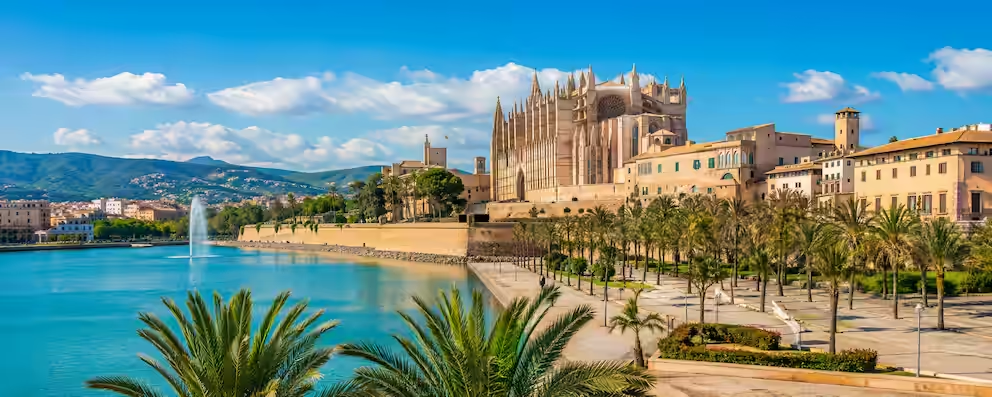
View of Palma Cathedral (La Seu) reflected in the lake of Parc de la Mar

Palma de Mallorca packs monuments, sea and food into a compact old town that you can explore on foot. This guide covers what to see in Palma based on how much time you have (a few hours, one day or two), your type of trip (as a couple, with kids, on a budget or on a rainy day) and links to official websites to book tickets or check up-to-date opening hours.

Must-see places in Palma

These are the 12 places that should not be missed on a first visit to Palma: history, art, sea and neighbourhoods with their own identity.

LugarTipoMotivoTiempoPrecio
Palma Cathedral (La Seu)MonumentThe city’s defining landmark; a Gothic cathedral by the sea with one of the largest rose windows in the world.60–90 minfrom €10
Royal Palace of La AlmudainaMonumentFormer Muslim alcázar turned royal residence, opposite the Cathedral and overlooking Parc de la Mar.60–90 min€8
Old Town of PalmaNeighbourhoodOne of the largest historic centres in the Mediterranean, with manor courtyards, squares and churches.3–5 hFree
Parc de la Mar and Seafront PromenadeWalkThe classic postcard of the cathedral reflected in the water and a 5.5 km seafront walk along the bay.30–60 minFree
Bellver CastleCastle14th-century circular Gothic castle with 360° views over Palma and the bay.1.5–2 h€4 (free on Sundays)
La Lonja and Consolat del MarMonumentGems of Mallorcan civic Gothic next to the seafront; the icon of the harbour district.30–45 minFree (exterior)
Arab Baths and the CallMonumentThe best surviving Islamic remains in Palma, next to the old Jewish quarter.20–30 min€3.50
Es Baluard Museum of Contemporary ArtMuseumContemporary art museum on the old city wall, with views over the harbour and the city.1.5–2 h€8
Miró Mallorca FoundationMuseumStudios and works by Joan Miró in Cala Major, with more than 6,000 pieces by the artist.1.5–2 h€10
Museum of MallorcaMuseumThe island’s main history museum, set in a palace in the old town (free on Sundays).60–90 min€2.40
Olivar Market and Santa Catalina MarketMarketCovered markets to try local produce and tapas in the heart of Palma.45–90 minFree (food extra)
Portixol and Ciutat JardíUrban beachFormer fishing district with seafront promenade, restaurants and beaches a short ride from the centre.Half dayFree

1-day walking route in Palma

A roughly 4–5 km walking itinerary through the historic centre, combining the old town, the cathedral, the palace and the seafront promenade. Total time: a full day (8–9 h) with meal stops.

  1. 9:00–10:00

    Plaça d’Espanya and old town

    Start at the EMT and train hub. Walk along Carrer de Sant Miquel, Plaça Major and Plaça de Cort (Town Hall).

  2. 10:00–12:00

    Arab Baths and Museum of Mallorca

    Brief stop at the Arab Baths (20 min) and visit the Museum of Mallorca, housed in an old-town palace.

  3. 12:00–13:30

    Palma Cathedral (La Seu)

    Tour the Gothic cathedral interior and, in season, climb the terraces for unique views.

  4. 13:30–14:15

    Royal Palace of La Almudaina

    Explore the former alcázar and its royal rooms, right opposite the cathedral.

  5. 14:30–16:00

    Lunch in the old town

    Tapas around La Lonja or a quick bite at the Olivar Market.

  6. 16:00–18:30

    Passeig del Born, La Lonja and Es Baluard

    Walk up the Born, pass La Lonja and the Consolat del Mar, and enter Es Baluard for contemporary art and views.

  7. 19:00–21:00

    Sunset in Santa Catalina or Can Pere Antoni

    Dinner in Santa Catalina or a stroll through Parc de la Mar to Can Pere Antoni beach for the sunset.

2-day route in Palma

Two days to add Bellver Castle, the coastal neighbourhoods and the modern art museums without rushing.

Day 1 — Historic centre and sea

  • Morning: Plaça d’Espanya, old town, Arab Baths and Museum of Mallorca.
  • Midday: Palma Cathedral and Royal Palace of La Almudaina; rest at Parc de la Mar.
  • Afternoon: Passeig del Born, La Lonja, Consolat del Mar and Es Baluard.
  • Sunset: tapas in Santa Catalina or a seafront walk to Can Pere Antoni.

Day 2 — Bellver, art and coast

  • Morning: take EMT bus (lines 3, 20 or 46) up to Bellver Castle; 360° views and Museum of the History of Palma.
  • Lunch: walk down to Santa Catalina or Es Baluard for lunch.
  • Afternoon: optional Miró Mallorca Foundation in Cala Major, or continue along the seafront to Portixol–Ciutat Jardí.
  • Sunset: swim and dinner by the sea at Ciutat Jardí.

Walking route through the historic centre

A compact route of about 3–4 km that covers the walled old town on foot. Ideal for 3–5 hours with visits or 2 hours in a quick version.

  1. Plaça d’Espanya (EMT/train starting point).
  2. Carrer de Sant Miquel and Sant Miquel Church.
  3. Olivar Market (optional stop, 20–30 min).
  4. Plaça Major.
  5. Plaça de Cort (Town Hall).
  6. Santa Eulàlia Church.
  7. Museum of Mallorca and Arab Baths.
  8. Palma Cathedral and Almudaina Palace.
  9. Parc de la Mar (rest and views).
  10. Passeig del Born and Casal Solleric (free entry).
  11. Optional: La Lonja and Es Baluard before returning to the start.

Free places and free-entry slots

Visiting Palma does not have to be expensive: there are always-free spaces and weekly or monthly free-entry slots at the main museums and monuments.

Siempre gratuitos

  • Walking around the old town, its squares and its manor courtyards.
  • Parc de la Mar and the seafront promenade.
  • Can Pere Antoni, Ciutat Jardí and Cala Major beaches.
  • Juan March Foundation Museum (always free).
  • Maritime Museum of Mallorca (Ses Voltes) and Can Balaguer (regular free entry).
  • Casal Solleric (free-entry exhibitions).

Free-entry slots and days

Museo / MonumentoFranja o día gratuito
Bellver CastleSundays for everyone; under 14s always free.
Miró Mallorca FoundationSaturdays from 15:00, first Sunday of the month and 1 March, 18 May, 24 June and 19 December.
Royal Palace of La AlmudainaWednesday and Sunday afternoons for EU citizens, residents and Ibero-Americans; 18 May and 12 October.
Museum of MallorcaSundays (according to current institutional information).
Es BaluardUnder 12s and accredited groups; pay-what-you-wish Fridays from €0.10; open days on selected dates.
CaixaForum Palma20 January (Sant Sebastià), 1 March (Balearic Islands Day) and 18 May (Museum Day); under 16s and CaixaBank customers always.

What to do based on your type of trip

Four ways to tailor your visit to Palma based on who is travelling and how much time you have.

With kids

  • Cathedral + Parc de la Mar: short visit and a playground with a lake.
  • Bellver Castle: forest, walls and views (better by EMT bus).
  • Es Baluard and Sa Faixina park: contemporary art and space to run around.
  • Urban beaches (Can Pere Antoni, Ciutat Jardí): shallow waters and a flat promenade.
  • Rainy-day plan: Palma Aquarium in El Arenal (about 15 min by EMT).

As a couple

  • Sunset at Parc de la Mar and dinner by the sea at Portixol.
  • Climb the cathedral terraces (in season) and have a drink at a rooftop in the centre.
  • Art and views afternoon at Es Baluard followed by dinner in Santa Catalina.
  • Half-day excursion to the Miró Foundation + a swim at Cala Major.

On a tight budget

  • Take advantage of Sundays to enter Bellver Castle and the Museum of Mallorca for free.
  • Visit La Almudaina for free on Wednesday or Sunday afternoons if you are an EU citizen or resident.
  • Walk the old town, Parc de la Mar and the seafront promenade at no cost.
  • Tapas at the stalls of the Olivar Market or Santa Catalina Market.
  • Juan March Foundation Museum, Casal Solleric and Can Balaguer: free entry.

If you only have a few hours

  • 1–2 hours: Cathedral (interior) + Almudaina (exterior) + Parc de la Mar.
  • 3 hours: add the old town (Plaça Major, Cort, Arab Baths).
  • 5–6 hours: quick 1-day route (cathedral, Almudaina, old town, Born, La Lonja).

What to do when it rains in Palma

Mallorca has more good days than bad, but when the weather does not cooperate there are plenty of indoor plans in the city.

  • Palma Cathedral and Sacred Art Museum.
  • Museum of Mallorca, Es Baluard and Miró Mallorca Foundation.
  • Juan March Foundation Museum (always free).
  • Covered markets: Olivar Market and Santa Catalina Market.
  • Cultural centres with free entry: CaixaForum, Can Balaguer and Casal Solleric.
  • Plan outside Palma (car or excursion needed): Palma Aquarium and the Caves of Drach (Porto Cristo).

Neighbourhoods and areas worth knowing

Beyond the monumental centre, Palma has neighbourhoods with their own character to visit, eat at or simply stroll through.

Old Town

Monumental walled area: cathedral, Almudaina, Arab Baths, Museum of Mallorca, squares and manor courtyards. Recommended time: half a day.

Half day

Santa Catalina

Former fishing district, now a trendy area with a market, tapas bars, restaurants and nightlife. Recommended time: 2–4 h.

2–4 h

La Lonja – Seafront

Gothic buildings (Sa Llotja, Consolat del Mar) and many dining options by the harbour. Recommended time: 2–3 h.

2–3 h

Portixol – Ciutat Jardí

Former fishing village with seafront walk, urban beaches and restaurants. Recommended time: late afternoon and dinner.

Afternoon + dinner

El Terreno

Hillside neighbourhood on the way up to Bellver, ideal as access to the castle and for viewpoints over the harbour.

1–2 h

Beaches and coast near Palma

Palma lets you combine monuments and the sea in a single day. These are the most accessible beaches from the centre.

Can Pere Antoni

Urban beach about 2 km from the centre, with direct views of the cathedral. Walkable or by bike along the seafront.

Walk / EMT

Ciutat Jardí

Urban beach between El Molinar and Es Coll d’en Rabassa, with a continuous promenade to Playa de Palma.

EMT / bike

Cala Major

Beach west of Palma (about 4 km), next to Marivent and close to the Miró Foundation.

EMT

Playa de Palma / El Arenal

Long 4–6 km beach to the east, connected to Palma by EMT. Ideal for a full beach day.

EMT

Illetas (neighbouring municipality)

Beaches west of Palma, reachable by public transport or car, considered among the closest and most attractive.

EMT / car

Food and markets

Mallorcan cuisine is enjoyed both in restaurants and at the stalls of the covered markets. Some classics to try:

  • Ensaimada: emblematic pastry with a protected designation of origin.
  • Sobrasada: cured sausage typical of Mallorca.
  • Tumbet: potato, aubergine and pepper stew with tomato.
  • Rice with fish and seafood, common at harbour and seaside restaurants.
  • Local produce: olive oil, cheeses and DO wines.

For tapas and fresh produce: Olivar Market (next to Plaça d’Espanya), Santa Catalina Market, the La Lonja area (Forn de Sant Joan, La Bóveda) and Santa Catalina.

Practical information and official links

Logistics and official websites to plan your visit to Palma.

Island tourism

Illes Balears — official tourism site of the Balearic Government publishes guides, routes and downloadable maps of Palma.

Illes Balears official website →

Royal Palace of La Almudaina

Official tickets from Patrimonio Nacional for self-guided and guided visits.

Almudaina tickets →

Quick tips

  • Buy Cathedral and Almudaina tickets in advance in high season (summer and Easter).
  • Use Plaça d’Espanya as your logistics base: train, intercity bus and EMT all meet there.
  • Avoid cruise-ship hours downtown (usually 10:00–13:00 on port days).
  • Make the most of Sundays and free-entry slots if you are travelling on a budget.
  • Wear comfortable shoes: the old town has plenty of cobbled streets.

Frequently asked questions about Palma de Mallorca

What are the must-see sights in Palma de Mallorca in one day?

A logical one-day route combines Palma Cathedral, the Royal Palace of La Almudaina, the old town (Arab Baths, Museum of Mallorca and Plaça Major), Parc de la Mar and Passeig del Born with La Lonja and Es Baluard. It fits into a full day on foot covering about 4–5 km.

How to plan a 2-day route in Palma without a car?

Spend the first day in the historic centre and by the sea (cathedral, Almudaina, old town, Born and La Lonja). On day two take the EMT bus (lines 3, 20 or 46) up to Bellver Castle, walk down to Santa Catalina and finish at Portixol–Ciutat Jardí for a swim and dinner by the sea.

Which museums are free or have free-entry days in Palma?

The Juan March Foundation Museum and the Maritime Museum of Mallorca (Ses Voltes) are always free. There are also weekly free-entry slots at Bellver Castle (Sundays), the Museum of Mallorca (Sundays) and La Almudaina (Wednesday and Sunday afternoons for EU citizens/residents).

What to do in Palma de Mallorca with kids?

The Cathedral + Parc de la Mar combo is ideal to start. Then take the EMT bus up to Bellver Castle, visit Es Baluard with Sa Faixina park next door and finish at the urban beaches of Can Pere Antoni or Ciutat Jardí. If it rains, Palma Aquarium (El Arenal) is the headline plan.

What to do in Palma when it rains?

Go for the indoor cultural offer: Cathedral and Sacred Art Museum, Museum of Mallorca, Es Baluard, Miró Foundation and Juan March Foundation Museum (free). The Olivar and Santa Catalina markets and the CaixaForum, Can Balaguer and Casal Solleric centres complete the day without stepping outside.

Where to swim near the centre of Palma without a car?

The closest beach to the centre is Can Pere Antoni, about 2 km along the seafront. You can also continue to Ciutat Jardí or, by EMT, reach Cala Major and Playa de Palma.

What is the best area to stroll in the late afternoon in Palma?

Parc de la Mar at sunset with the illuminated cathedral, the seafront promenade to Portixol, and the bars and restaurants of Santa Catalina are the three liveliest areas from 19:00 onwards.

Is it easy to get around Palma by public transport?

Yes. The EMT Palma network covers the entire centre, Bellver, Cala Major, Portixol and Playa de Palma. Plaça d’Espanya is the main hub where the train, intercity buses and most urban lines meet.

What is the best time of day to visit Palma Cathedral?

Early morning (10:00–11:30) and mid-afternoon are usually the quietest slots. Avoid mornings on cruise-ship days, when the centre fills with visitors.

What typical dishes should I try in Palma and where?

Ensaimada, sobrasada, tumbet and rice with fish and seafood are the classics. To try them in a local atmosphere, head to the stalls of the Olivar or Santa Catalina markets and the bars of La Lonja and Santa Catalina.